Our team
For sensitive environments our engineers can be admitted to.
Nativance engineers do the work inside your infrastructure, under your access rules. Your data stays where it is.
A full-stack drop-in for private AI. We bring the compute if you need it, choose the model, build the evaluations, and run the post-training, all inside your walls. On truly air-gapped sites, an automated product does the same work on its own.
You don’t source the compute.
We can drop in the full stack, hardware included, inside your facility. Or we run on what you already have.
You don’t choose the model.
We select the open-weight base model that fits your requirements, and we replace it when a better one arrives.
You don’t build the evaluations.
We generate them from your workflows, data and domain knowledge, and then we run them.
You don’t do the post-training.
We prepare the training data, run the pipeline and test the improved model before it goes live.
Your part: approve what we can access, approve what goes live, and use the model. Everything it produces is yours.
When this site says “we”, it means our team. On a truly air-gapped site, it means the automated product. Either way, the work isn’t yours.
For sensitive environments our engineers can be admitted to.
Nativance engineers do the work inside your infrastructure, under your access rules. Your data stays where it is.
For extremely sensitive, truly air-gapped environments.
Where no outside person or connection can reach the environment, we deploy a product that does the same work on its own.
| Our team | Automated product | |
|---|---|---|
| Compute | Yours, or deployed by us | Yours, or deployed by us |
| Chooses the model | Our engineers | The product, from models brought across |
| Builds and runs evaluations | Our engineers | The product |
| Does the post-training | Our engineers | The product |
| Nativance staff inside | Yes, under your access rules | None, and no connection to us |
| Your part | Approve access and what goes live | Approve imports and what goes live |
Running models locally solves data residency. Making them continuously better solves the bigger problem. That work is ours.
We choose an open-weight model and run it in your infrastructure.
You don’t compare models or stand up serving. We pick what fits your requirements, deploy it on your hardware or on compute we bring, and keep it running. Prompts, responses and proprietary information never go to an external AI provider.
Fully disconnected sites: the automated product does this with no internet connection, at any point.
| Model | Base | Runs on | Route out |
|---|---|---|---|
contract-review | Open-weight | Your cluster | None |
procedure-qa | Open-weight | Your cluster | None |
base-unmodified | Open-weight | Your cluster | None |
A downloaded model gets you to this line. What makes it useful to your organization is below it, and we do that too.
We generate and execute evaluations using your internal workflows, data, and domain knowledge.
Public benchmarks can’t tell you whether a model follows your procedure. You don’t write test cases. We build them from the way your organization actually works, then score models against them.
Fully disconnected sites: the automated product generates and runs them inside your environment.
Generated from Exception Handling Procedure, rev. 14
Evaluation case
An invoice exceeds its purchase order by 3%. Policy tolerance is 5%, but the vendor is on the watch list. What should the reviewer do?
We add the failure to the training data for the next run.
We post-train and refine specialized models using locally generated feedback and datasets.
You don’t run training jobs. We turn evaluation failures into training data, run the pipeline, and test the result against your suite. The model that comes out is a versioned artifact you hold.
Fully disconnected sites: the automated product runs the whole pipeline on your compute.
contract-review, candidate generation 4
Interface fragments are illustrative and use sample data.
Out of the box, a model knows nothing about your organization. There are two good ways to fix that. You don’t have to pick one. We test them on your documents and use whichever gets the right answers.
Think of a very fast librarian. For each question, we find the few passages that matter and hand only those to the model.
This is the one to use when you have a lot of documents. The model answers from what it was handed and shows you where it came from.
Asked by an AP reviewer
Can I approve an invoice that’s 3% over its purchase order?
Yes, up to 5%, unless the vendor is on the watch list. Then it has to be escalated.
Sources: Exception Handling Procedure, rev. 14, sections 4.2 and 4.3
Ahead of time
Parse
PDFs, scans through local OCR, tables, email.
Chunk
Split by section. Keep headings and revision numbers.
Embed
A local embedding model. No hosted API.
Index
Vectors and keywords, with each document’s permissions.
Each time someone asks
Filter
Drop everything this user can’t open.
Search
Hybrid: vector and keyword together.
Rerank
A local cross-encoder keeps the best passages.
Answer
The model answers from those passages and cites them.
Think of an expert who has already read the whole manual. We load the full document set into the model once and keep it in memory.
Nothing gets missed because nothing has to be found. It only works when the set is small enough to fit, so it’s the one to use for a single manual or a tightly linked set of documents.
How it works
Scope
One bounded document set per access group.
Load
The set goes at the start of the model’s context.
Cache
Compute it once. Hold the prefix KV cache in GPU memory.
Answer
Only the question is processed. The whole set stays in view.
| RAG | CAG | |
|---|---|---|
| Best for | Large, growing collections: years of records, tickets, filings | Small, tightly linked sets: one manual, a policy set, a case file |
| Size limit | The index can grow far beyond the model’s context window | The whole set has to fit inside the context window |
| What the model sees | The top passages retrieved for this question | Every document in the set, every time |
| Access control | Per document, filtered for each user before retrieval | Per cache, with a separate cache for each access group |
| When a document changes | Re-embed and re-index the changed document | Rebuild the cache |
| Extra services | Embedding model, index, reranker | None, but the cache holds GPU memory |
| Speed | Adds a retrieval step to every question | Slow to load once, then quick to start answering |
| How it usually fails | The right passage never gets retrieved | The set outgrows the context, or a detail gets lost in a long one |
| External connectivity | None required | None required |
They also combine well: RAG finds the right manual, then CAG loads all of it.
If someone can’t open a file today, the model won’t quote it to them tomorrow.
Source-system permissions are mirrored into the index and enforced on the asking user’s identity, before any text reaches the model.
And yes, the embeddings stay inside too.
Embedding is a step that often goes out to a hosted API. Here, the embedding model, reranker, index and cache all run inside your boundary, including on air-gapped sites.
The query trace is illustrative and uses sample data.
There is a long way between downloading a model and owning one that improves your business. This is the work in between, and we do it for you.
Workflows
Evaluations
We turn what your teams actually do into tests a model has to pass.
Expertise
Training data
We turn what your specialists know into something a model can learn from.
Production failures
Improvements
We feed what goes wrong into the next training cycle, not a ticket queue.
This generation
The next base model
We carry your evaluations and datasets forward when a better base model arrives.
Seven stages in one closed loop, with no dependency on anything outside the line, and none of them are yours to run. Select a stage to see who does the work, what it takes in, and what it produces.
↺ Back into evaluation
Customer-controlled
Local evaluation generation
We turn workflows and domain knowledge into test cases and scoring criteria that reflect what your people actually check. Generation runs on models inside your environment.
Inside your boundary
The starting material is what your organization already knows: its records, procedures and the judgement of its specialists. You approve what is in scope. We connect it and prepare it.
Who does the work: You approve the sources. We do the rest.
External connectivity: None required. Data stays where you keep it.
We turn workflows and domain knowledge into test cases and scoring criteria that reflect what your people actually check. Generation runs on models inside your environment.
Who does the work: Nativance, or the automated product on a truly air-gapped site.
External connectivity: None required. No external model API is involved.
We run the suites against candidate models on your hardware. Results show where a model holds up on your work and where it doesn’t, case by case.
Who does the work: Nativance, or the automated product on a truly air-gapped site.
External connectivity: None required. Results are written to your systems.
We structure failures, corrections and reviewed production outputs into datasets. This is where organizational knowledge becomes something a model can learn from.
Who does the work: Nativance, or the automated product on a truly air-gapped site.
External connectivity: None required.
We run the training pipeline that refines a specialized model on your compute, from start to finish. Checkpoints and logs never leave your environment.
Who does the work: Nativance, or the automated product on a truly air-gapped site.
External connectivity: None required. The full pipeline runs disconnected.
The candidate is a versioned artifact in your custody. We test it against your suites and bring you the results. You approve whether it goes live.
Who does the work: We test it and propose it. You approve it.
External connectivity: None required.
We keep the model serving inside your network, answering from your documents through RAG or CAG. Under your retention rules, reviewed outputs feed the next evaluation cycle, and we keep the loop going.
Who does the work: Nativance, or the automated product on a truly air-gapped site.
External connectivity: None required. Prompts and responses stay local.
↺ Back into evaluation
Offline import, a gate in the wall
Nothing crosses an air gap by itself. We prepare new base models and software updates. Your security process reviews them and brings them across, and they enter the cycle at evaluation.
The full AI lifecycle runs without external connectivity. That includes the parts that often depend on someone else’s API without saying so: generating evaluations, preparing data, and post-training.
Where our people can’t enter either, the automated product does the work. It needs no connection to us and no access for our staff.
Outside
The platform needs a route to none of them.
A demonstration of how the platform is designed, not live telemetry.
Inside your boundary
Offline inference
Models serve from your hardware with no outbound calls.
Running
Offline evaluation generation and execution
Test cases are generated and scored on site, without an external model.
Running
Offline data processing
Evaluation and training data is prepared inside your environment.
Running
Offline retrieval (RAG and CAG)
Embedding, indexing, reranking and context caching all run locally, with your permissions enforced.
Running
Offline post-training
The training pipeline runs on your compute, start to finish.
Running
Customer-controlled models and artifacts
Weights, checkpoints, evaluations and logs are files in your custody.
Running
Deployment inside existing infrastructure
We install in the environment you already run and govern, with our compute if you need it.
Running
Customer-controlled updates
New base models and software arrive only through an offline import you approve.
Running
Nativance doesn’t claim certifications or accreditations it hasn’t earned.
Authorization to operate in your environment is a decision for you and your assessors. Bring us your requirements early. We’ll tell you plainly what the platform does, what it touches, and where the work still sits with us.
An API gives you a capability on someone else’s terms: their weights, their release schedule, their pricing.
With Nativance, we do the work and you own the result. The weights, the evaluations and the training data sit with your organization. Nothing changes without your approval, and all of it gets more useful as it learns.
Renting frontier models will still make sense for some of your hardest problems, where your data allows it. It makes less sense for the models that encode how your business works.
| Rented through an API | Owned, on Nativance | |
|---|---|---|
| Who does the work | Your team, on top of the API | Nativance, inside your walls |
| Where inference runs | The provider’s infrastructure | Your infrastructure |
| Your prompts and data | Cross your boundary | Stay inside it |
| When the model changes | When the provider decides | When you approve it |
| What your usage builds | A bill | Evaluations, datasets, and a model fitted to your work |
| When a new model appears | You adopt what is shipped | We test it on your evaluations, then adapt it for you |
When a better open-weight base model arrives, you don’t start over and you don’t do the migration. We run your evaluations to see whether it is better at your work, then adapt it with your datasets.
Learned behavior doesn’t transfer automatically between unrelated architectures, and we won’t pretend it does. Post-training runs again, and we run it. What you keep is everything that makes that run faster to start and possible to measure.
| Base model A | Base model B | Next base model | |
|---|---|---|---|
| Evaluations | Carried forward and extended | ||
| Datasets and feedback | Carried forward and extended | ||
| Workflow and domain knowledge | Carried forward and extended | ||
| Post-training | Run again | Run again | Run again |
| Adapted weights | This generation | This generation | This generation |
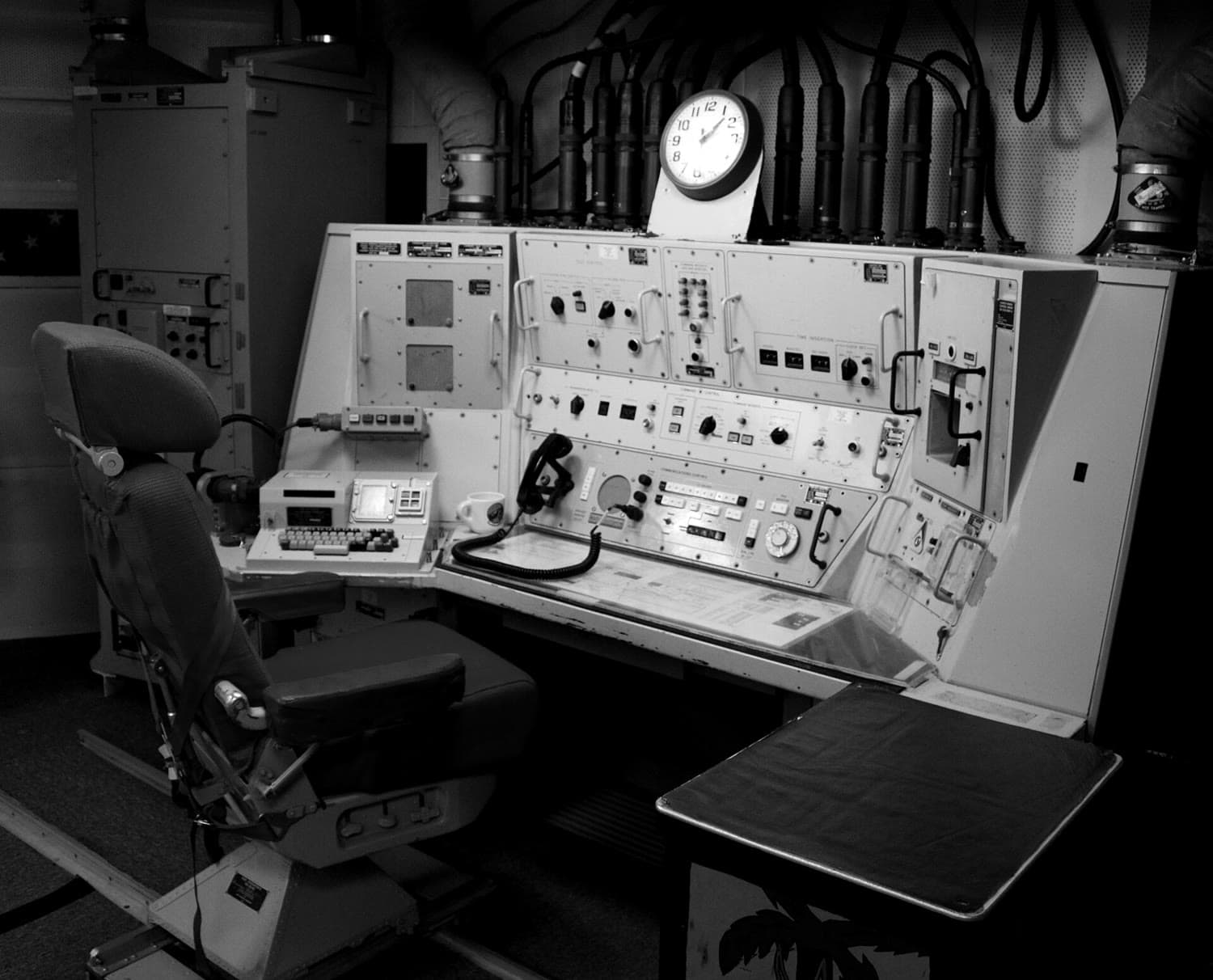
AI capabilities in restricted, disconnected, and sensitive computing environments.
Pictured: Minuteman III launch control. Archive photograph.
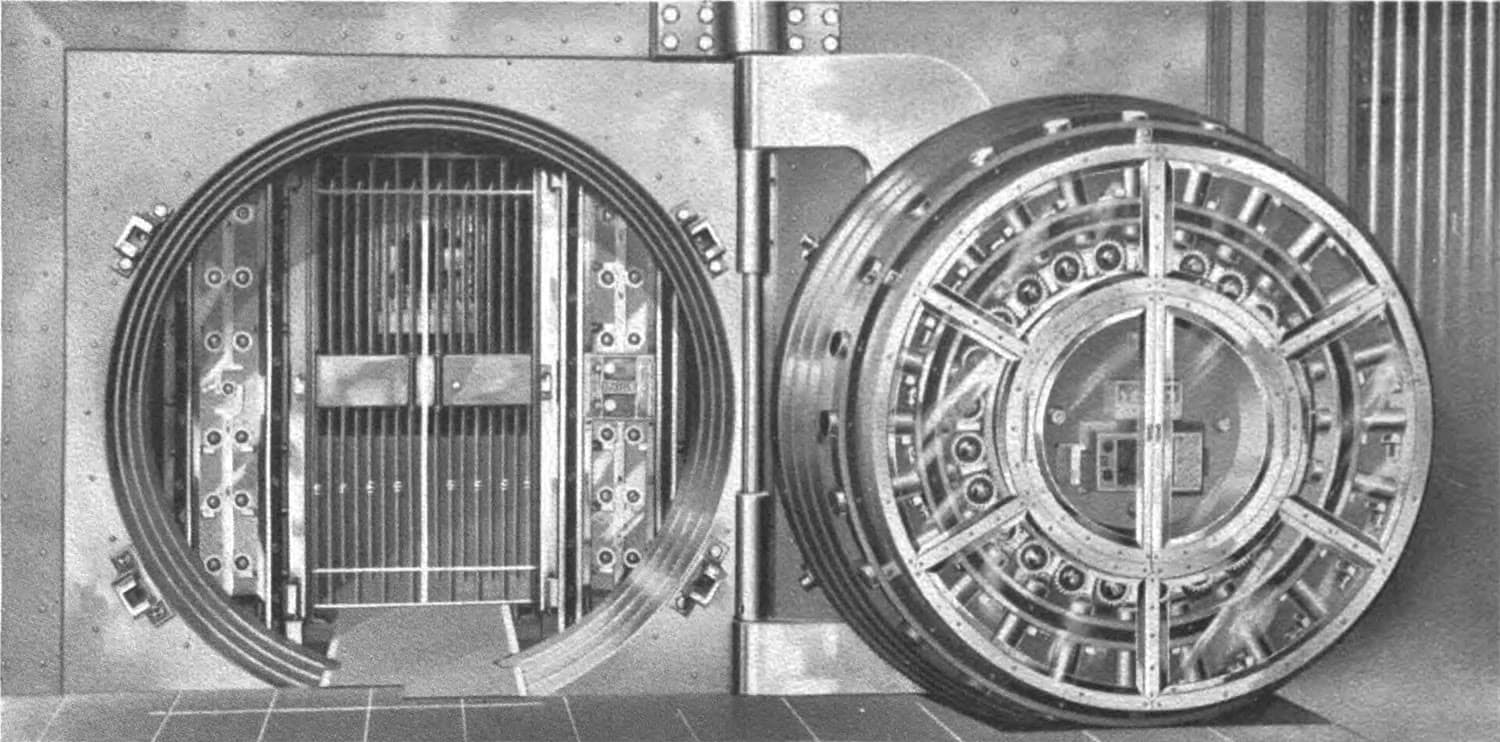
Models evaluated and adapted using proprietary institutional workflows and data.
Pictured: Safe deposit vault, 1908. Archive photograph.
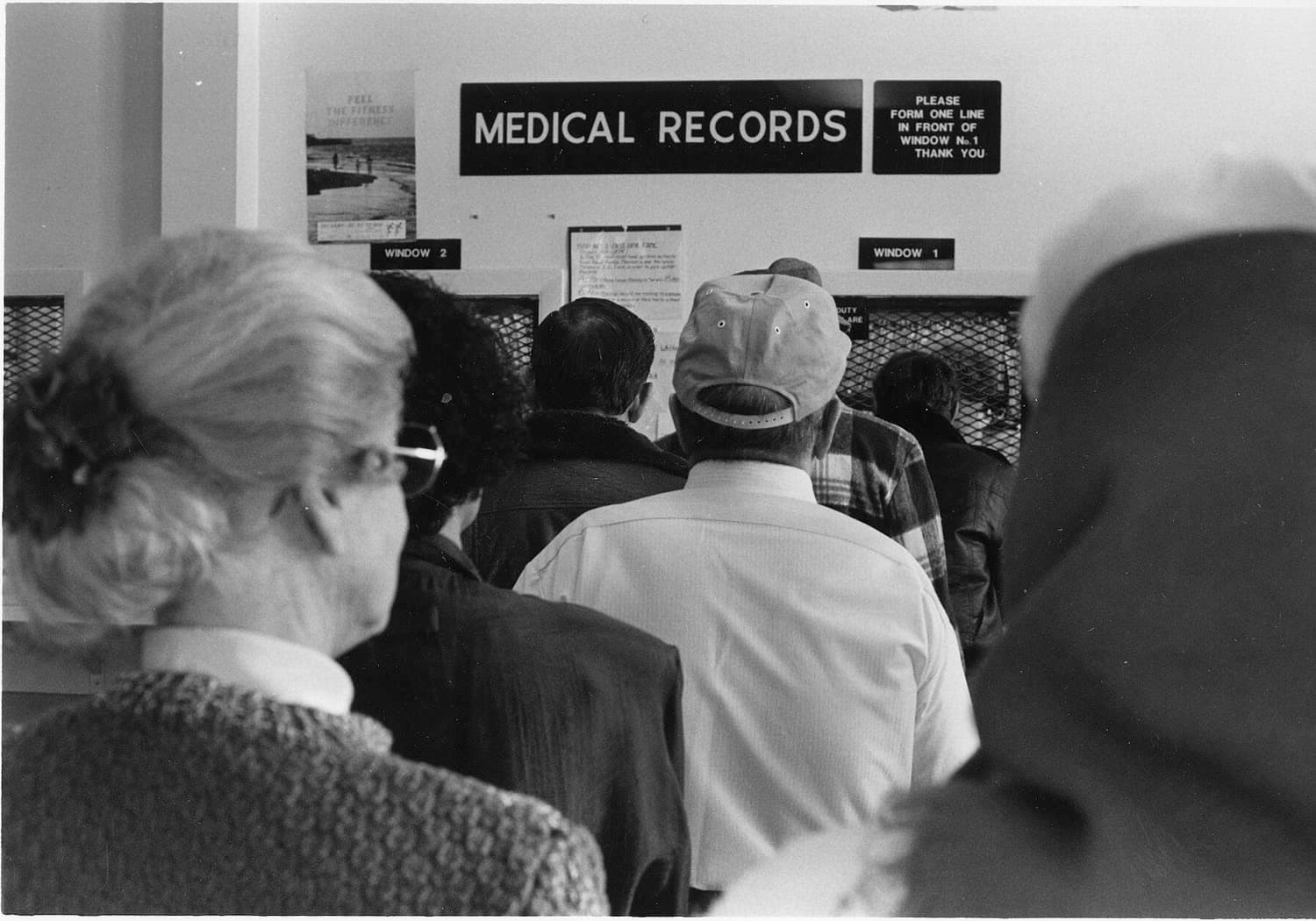
Specialized AI deployed inside tightly controlled environments.
Pictured: A hospital medical records counter. Archive photograph.
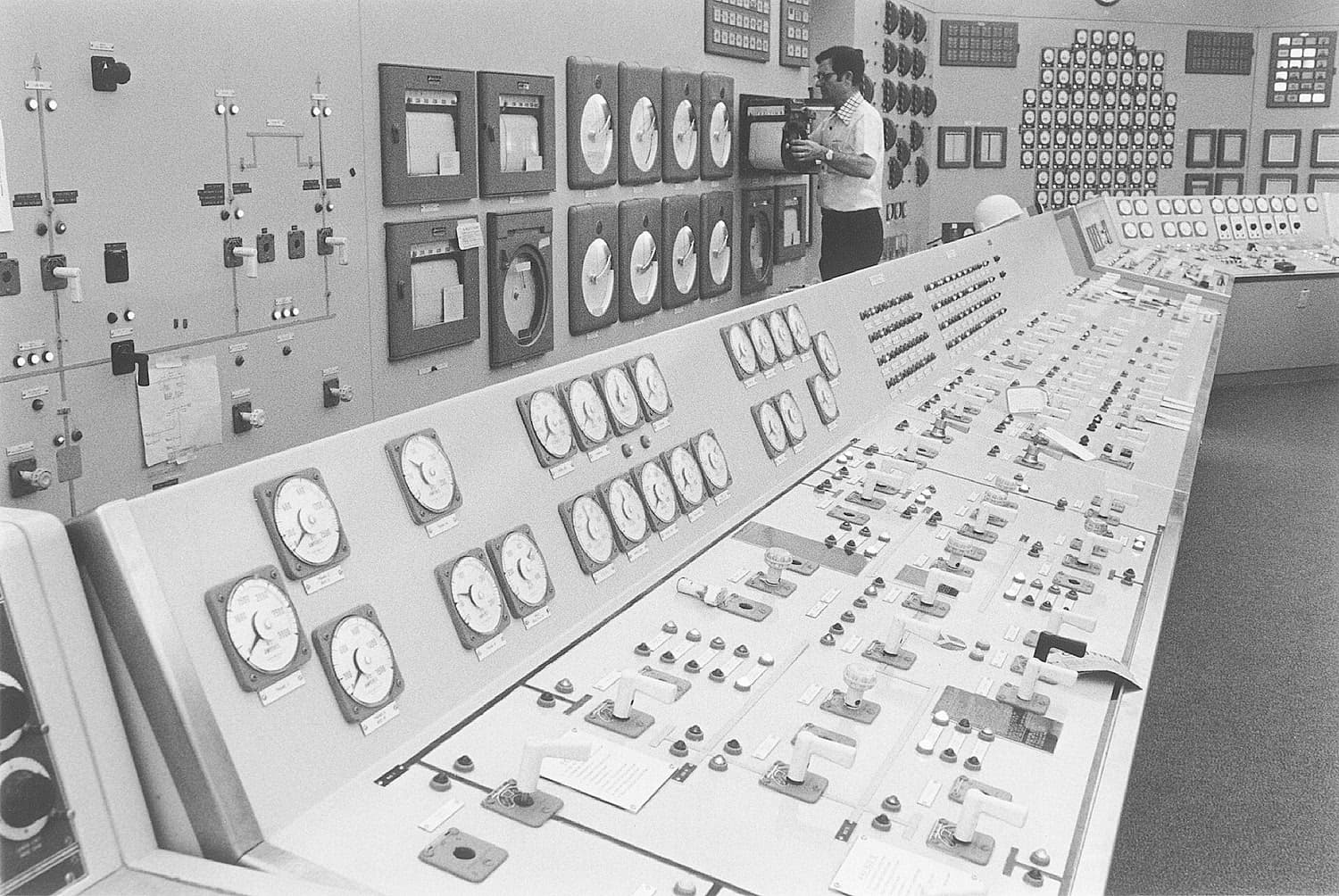
Local AI capabilities for organizations with stringent operational and network constraints.
Pictured: Dresden nuclear power station control room. Archive photograph.
These describe where the platform is designed to run. They aren’t statements of regulatory approval. HIPAA obligations, system authorization and safety certification depend on your deployment and your assessors, and we’ll be direct about what we can and can’t support today.
All of them inside your boundary. Each one leaves you with something you keep.
We drop in the stack: compute if you need it, and an open-weight model we choose.
In your facility, inside your existing infrastructure.
We connect approved internal datasets and workflows.
You approve what is in scope. We index it for RAG or load it for CAG.
We generate and execute domain-specific evaluations.
The model is measured on your work, not on a public benchmark.
We improve the model through locally executed post-training.
We turn failures and corrections into training data.
We deploy updated models and repeat the improvement cycle.
You approve what goes live. Then we run the cycle again.
On a truly air-gapped site, the automated product runs all five.
↺ The cycle returns to step 3, still inside the boundary.
The most valuable data in the world sits behind walls. The people responsible for it are right not to send it to an API, and they shouldn’t have to give up AI to keep it there.
Nativance drops the whole stack inside those walls and does the work: deploying compute where it’s needed, choosing the model, building the evaluations, and running the post-training. Where our people can’t go, an automated product we’re building does it.
We’re early. You won’t find customer logos or benchmark charts here, because we won’t publish any we can’t stand behind. If you have a deployment that can’t leave your building, we’d like to hear the real constraints.
We build AI systems that run where you choose, learn from your organization, and improve without sending your data outside your infrastructure.
The one thing on this page that crosses a boundary is the message you decide to send us.